
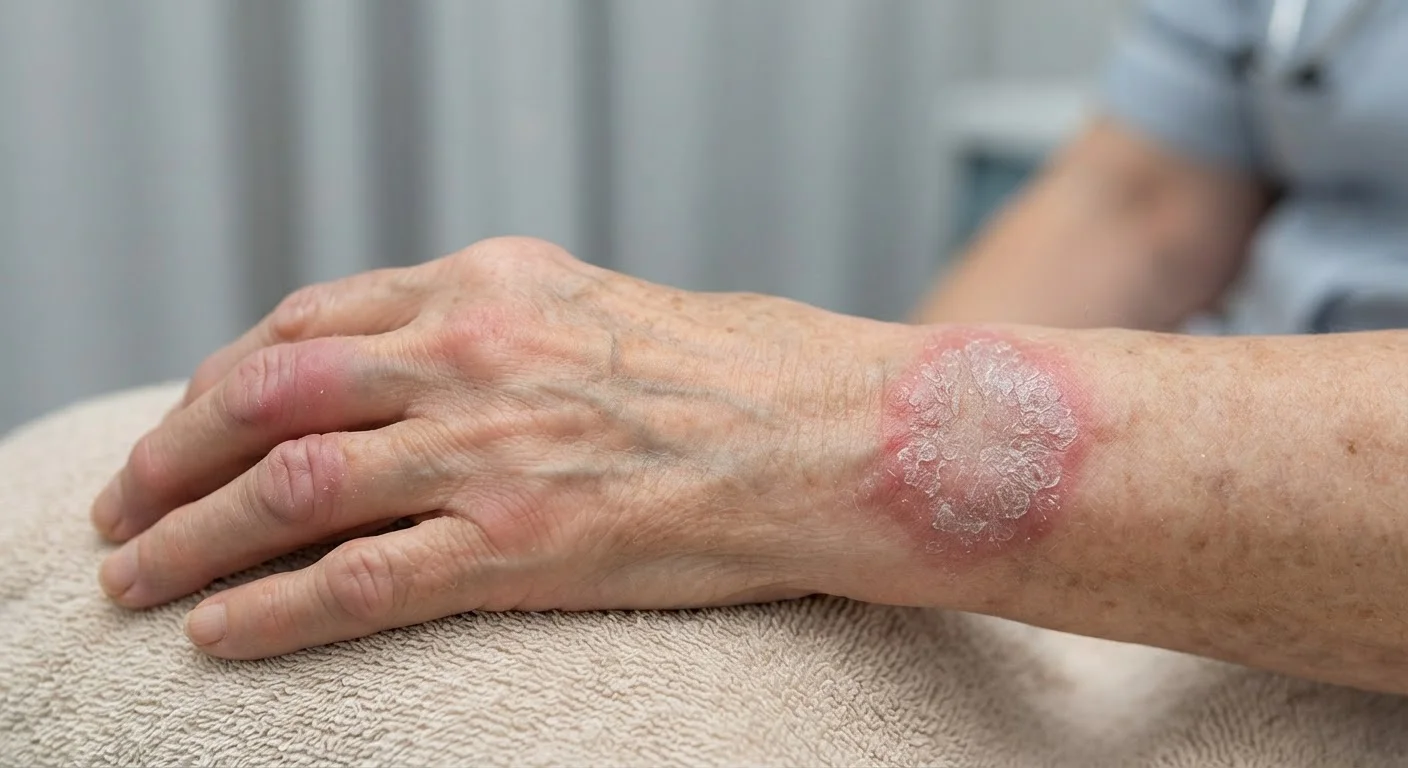
The Link Between Skin and Joint Inflammation
Psoriatic arthritis develops when the same immune dysfunction driving skin inflammation in psoriasis begins to target joint tissue. Approximately 10–30% of people with psoriasis develop this joint condition, according to research published by the National Psoriasis Foundation. The connection is not coincidental — both conditions share underlying inflammatory pathways involving cytokines such as tumor necrosis factor (TNF) and interleukin-17.
Unlike osteoarthritis, which results from mechanical wear, psoriatic arthritis is driven by an overactive immune response. This places it in the same category as other immune-mediated joint diseases. For readers already familiar with the differences between osteoarthritis and rheumatoid arthritis, psoriatic arthritis sits firmly in the inflammatory camp.
10–30%
Psoriasis patients who develop psoriatic arthritis
Estimates from the National Psoriasis Foundation and rheumatology literature consistently place risk in this range.
~7 years
Average delay from psoriasis onset to joint diagnosis
Research published in rheumatology journals suggests joint disease often goes unrecognized for years after skin symptoms begin.
30–50
Most common age of onset (years)
Psoriatic arthritis can occur at any age but peaks in middle adulthood, affecting men and women at roughly equal rates.
How Psoriatic Arthritis Presents
One of the defining features of psoriatic arthritis is its variety. Clinicians recognize five main patterns of joint involvement:
- Asymmetric oligoarthritis: Affects a few joints on different sides of the body, often the knees, ankles, or fingers.
- Symmetric polyarthritis: Resembles rheumatoid arthritis, affecting the same joints on both sides.
- Distal interphalangeal (DIP) predominant: Targets the joints closest to the fingernails and toenails — a hallmark pattern unique to psoriatic arthritis.
- Spondylitis: Involves inflammation of the spine and sacroiliac joints, similar to ankylosing spondylitis.
- Arthritis mutilans: A severe, destructive form affecting the small joints of the hands and feet; relatively rare.
Dactylitis — diffuse swelling of an entire finger or toe, giving a "sausage digit" appearance — is another hallmark sign. Enthesitis, inflammation where tendons and ligaments attach to bone (such as at the heel), is also common and can be particularly painful.
Track Both Skin and Joint Symptoms Together
Keeping a simple symptom diary that records skin flares alongside joint pain, stiffness, and swelling can help your healthcare team identify patterns and make a faster, more accurate diagnosis. Note which joints are affected, time of day symptoms peak, and any associated nail changes. This record is especially useful when seeing both a dermatologist and a rheumatologist.
Who Is at Risk and When It Typically Appears
Psoriatic arthritis can develop at any age but most commonly appears between 30 and 50 years old. Men and women are affected roughly equally. The primary risk factor is having psoriasis — particularly if the skin condition is severe or involves the nails, scalp, or skin folds. Nail changes such as pitting, ridging, or separation from the nail bed are especially associated with joint disease.
Genetic susceptibility is well established. Variants in the HLA-B27 gene, familiar from research into other spondyloarthropathies, are found in a subset of people with psoriatic arthritis. A family history of either psoriasis or psoriatic arthritis increases individual risk.
Environmental triggers — including physical trauma, infections, and significant psychological stress — may also activate or worsen the condition in genetically predisposed individuals. This overlap of genetics and environment mirrors patterns seen in lupus-related arthritis and other immune-driven joint conditions.
Nail Changes as an Early Clue
Psoriatic nail disease — including pitting, thickening, discoloration, or nail separation — is present in up to 80% of people with psoriatic arthritis, compared with about 40% of those with psoriasis alone. If you have psoriasis and notice nail changes alongside any joint discomfort, mention both to your doctor. Nail involvement is considered an independent risk factor for developing psoriatic arthritis and may prompt earlier screening.
Diagnosis and the Importance of Early Recognition
There is no single definitive test for psoriatic arthritis. Diagnosis relies on clinical evaluation — examining joint patterns, skin and nail findings, and ruling out other conditions. Blood tests may show elevated inflammatory markers, but rheumatoid factor is typically absent. Imaging, including X-rays and MRI, can reveal characteristic joint changes such as bone erosion alongside new bone formation — a combination not commonly seen in other arthritis types.
Delayed diagnosis is a recognized problem. Patients often see a dermatologist for their skin and may not report joint symptoms, or vice versa. Rheumatology societies recommend that people with psoriasis be routinely screened for joint symptoms, particularly those with nail involvement, since early intervention is associated with better long-term joint outcomes.
This article is for general informational purposes only and does not constitute medical advice. If you experience joint pain, swelling, or changes in your skin or nails, please consult a qualified healthcare professional for evaluation and guidance.