
What Causes Each Condition?
The most fundamental difference between osteoarthritis (OA) and rheumatoid arthritis (RA) lies in their origins. Understanding this distinction shapes everything from how each condition is diagnosed to how it is managed.
Osteoarthritis develops when the cartilage — the smooth cushioning tissue that covers the ends of bones in a joint — gradually breaks down over time. As cartilage wears away, bones can begin to rub against each other, causing pain, swelling, and reduced range of motion. Age, prior joint injuries, excess body weight, and repetitive joint use are all recognized contributors. To explore the mechanics in depth, see what happens inside a worn joint.
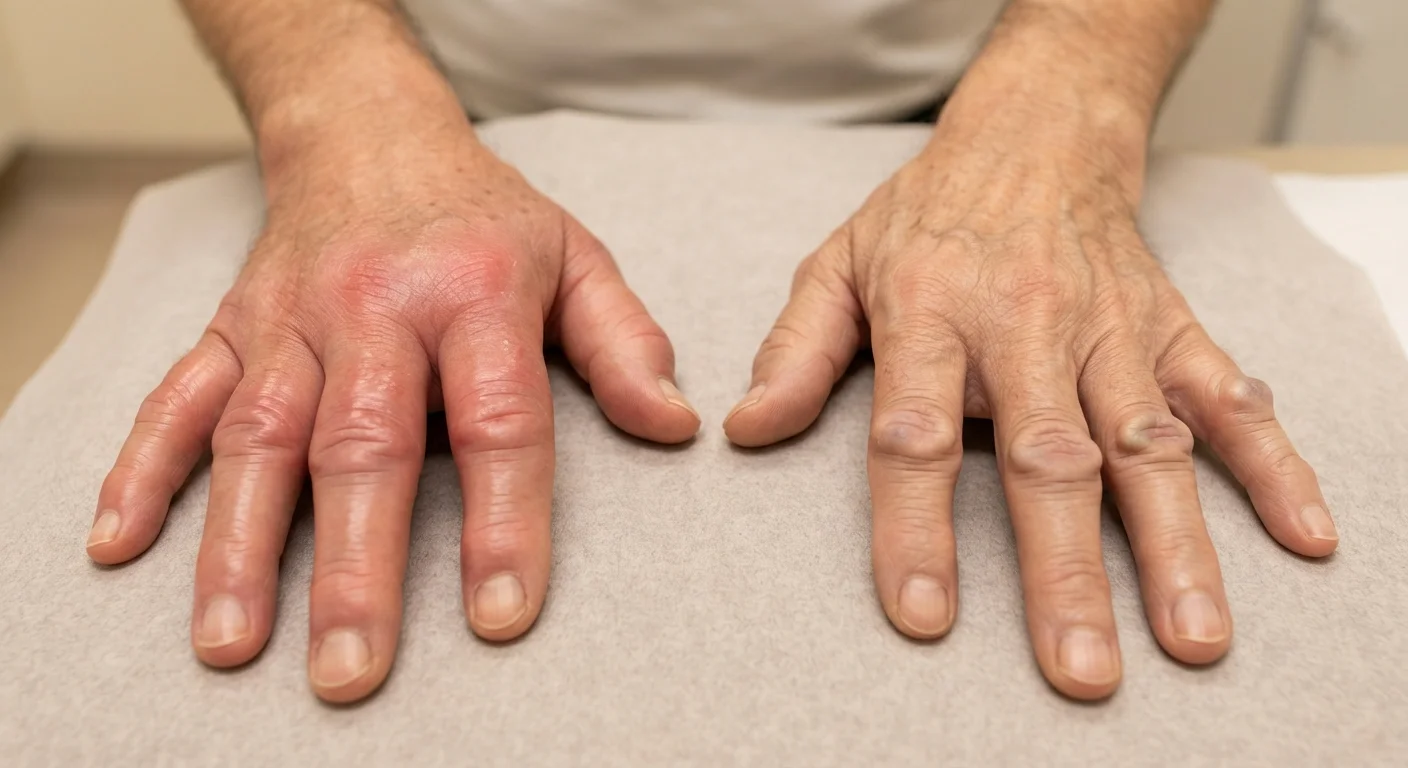
Rheumatoid arthritis, by contrast, is an autoimmune condition. The immune system mistakenly targets the synovium — the thin membrane lining the joints — triggering chronic inflammation that can damage bone and cartilage over time. It is not caused by wear or aging. Learn more about this key distinction in our guide to RA as an autoimmune condition.
| Criterion | Osteoarthritis (OA) | Rheumatoid Arthritis (RA) |
|---|---|---|
| Underlying cause | Cartilage breakdown (mechanical) | Autoimmune — immune attacks joint lining |
| Joint pattern | Often asymmetric | Typically symmetric (both sides) |
| Joints most affected | Knees, hips, spine, hands | Fingers, wrists, toes, knees |
| Morning stiffness | Brief (under 30 minutes) | Prolonged (often over 1 hour) |
| Systemic symptoms | Rare | Common (fatigue, fever, organ involvement) |
| Age of onset | Usually after age 50 | Often ages 30–60 |
| Inflammation level | Mild or localized | Significant and systemic |
How Symptoms Differ in Practice
Both conditions cause joint pain and stiffness, but the pattern of symptoms provides important diagnostic clues.
In OA, pain tends to worsen with physical activity and improve with rest. It typically develops in specific weight-bearing joints — knees, hips, the base of the thumb, and the spine. Joint involvement is often asymmetric, meaning one knee may be more affected than the other. Morning stiffness, when present, usually resolves within 30 minutes.
In RA, stiffness lasting more than one hour in the morning is a hallmark symptom. Joints affected tend to be smaller — fingers, wrists, and toes — and involvement is characteristically symmetric, meaning both hands or both wrists are typically affected simultaneously. Unlike OA, RA is a systemic disease: fatigue, low-grade fever, and a general sense of illness can accompany joint symptoms. Over time, RA may affect the lungs, cardiovascular system, and eyes.
Why Accurate Diagnosis Matters
OA and RA can coexist in the same person, and their early symptoms can overlap, making self-diagnosis unreliable. A rheumatologist uses a combination of physical examination, blood tests (such as rheumatoid factor and anti-CCP antibodies), and imaging to distinguish between the two. Getting the right diagnosis early — particularly with RA — can meaningfully influence outcomes, since disease-modifying treatments are most effective when started promptly.
For a broader look at how inflammation shapes different arthritis types, our article on inflammatory vs. non-inflammatory arthritis explains the key divide and why it matters for diagnosis.
Who Is Affected — and When?
Age and demographic patterns differ meaningfully between the two conditions.
OA is strongly age-related. It becomes increasingly common after age 50 and affects the majority of adults over 65 to some degree. Both men and women develop OA, though women experience higher rates after menopause, particularly in the hands and knees.
RA can onset at any age but most commonly develops between ages 30 and 60. It affects approximately two to three times more women than men. Because RA is immune-driven rather than wear-related, it does not follow the same age trajectory as OA.
32.5M
U.S. adults estimated to have OA
According to the Centers for Disease Control and Prevention (CDC), osteoarthritis is the most common form of arthritis in the United States.
~1.5M
Americans living with RA
The Arthritis Foundation estimates approximately 1.5 million people in the U.S. are affected by rheumatoid arthritis.
2–3×
Higher RA prevalence in women vs. men
Rheumatoid arthritis is consistently reported to affect women at two to three times the rate of men across multiple epidemiological studies.
Other inflammatory joint conditions — such as psoriatic arthritis and lupus-related arthritis — share some features with RA but have distinct causes and presentations. A plain-language overview of arthritis types can help orient readers who are still piecing together their picture.
This article is for general informational purposes only and does not constitute medical advice. If you are experiencing joint pain or other symptoms described here, please consult a qualified healthcare professional for proper evaluation and diagnosis.