
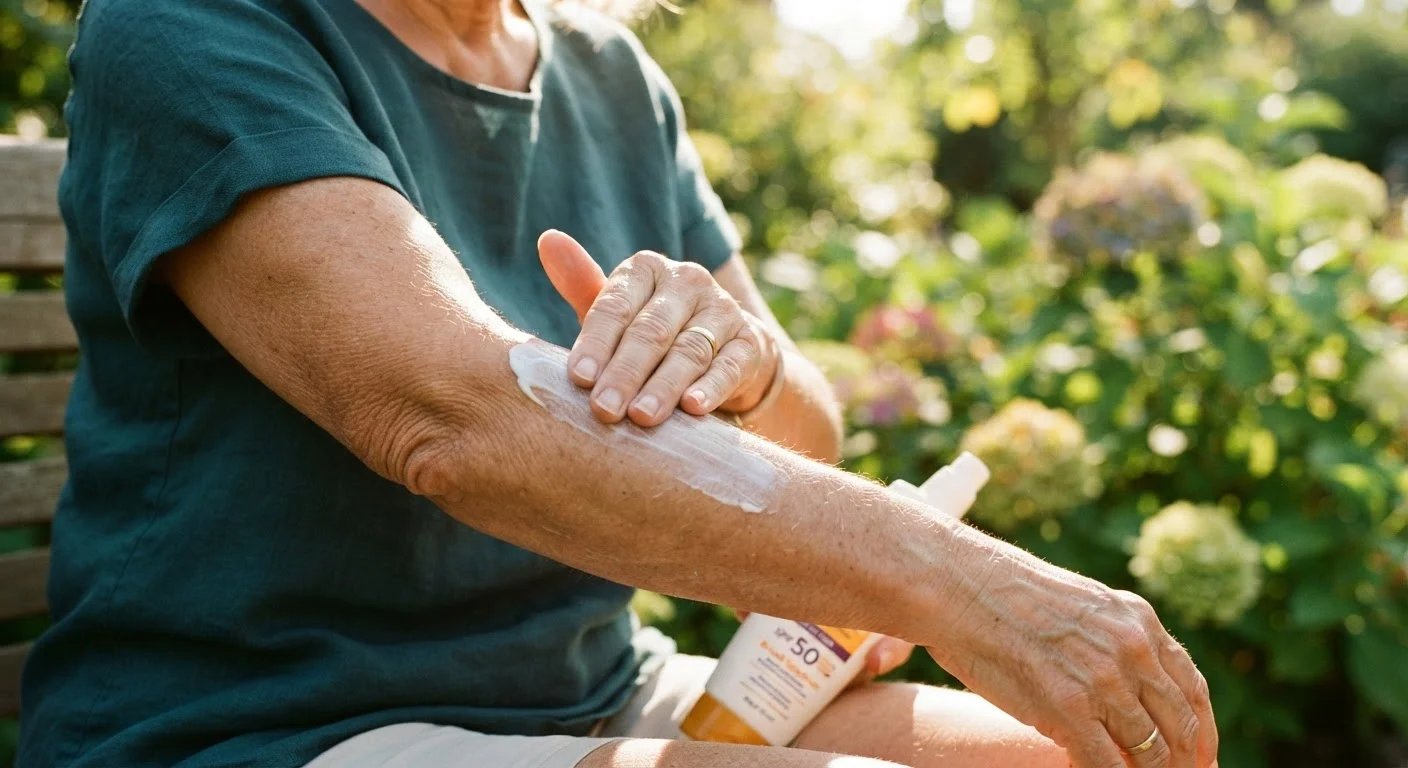
Why UV Exposure Remains the Primary Environmental Skin Cancer Driver
Skin cancer is the most commonly diagnosed cancer in the United States, and ultraviolet (UV) radiation — from the sun or from artificial sources like tanning beds — is the primary environmental cause. UV radiation damages the DNA within skin cells. When that damage accumulates faster than the body can repair it, mutations can develop that allow cells to grow uncontrollably.
There are three main types of skin cancer: basal cell carcinoma, squamous cell carcinoma, and melanoma. All three are linked to UV exposure, though melanoma carries the highest risk of spreading to other organs. Understanding how melanoma, basal cell, and squamous cell carcinoma differ in behavior and outlook is an important part of knowing what to watch for.
For older adults, cumulative lifetime exposure is particularly significant. Decades of outdoor activity — often before widespread sunscreen use — means many people over 60 carry a higher UV burden than they may realize. UV exposure is among the risk factors older adults most commonly underestimate.
Myth
A base tan protects your skin from sun damage.
Fact
A tan is itself evidence of DNA damage. It offers minimal protection equivalent to an SPF of roughly 2–4.
The idea that a tan acts as a natural shield is widespread but medically unsupported. Melanin darkens in response to UV-induced DNA damage — the tan is a visible marker of harm already done, not a barrier against future harm. According to the American Academy of Dermatology, any tan from UV exposure increases skin cancer risk. A tan provides negligible sun protection compared with properly applied broad-spectrum sunscreen.
Myth
Skin cancer only affects people with fair skin.
Fact
People of all skin tones can develop skin cancer. Darker skin offers some UV protection but does not eliminate risk.
While individuals with lighter skin tones do face statistically higher rates of melanoma, skin cancer can and does occur across all racial and ethnic groups. Importantly, skin cancer in people with darker skin is often diagnosed at a later stage — partly because the myth of immunity delays screening. Acral lentiginous melanoma, a subtype that appears on palms, soles, and under nails, is more common among Black and Asian populations. Everyone benefits from awareness and regular skin checks.
Myth
Clouds block UV rays, so overcast days are safe.
Fact
Up to 80% of UV radiation can penetrate cloud cover, meaning overcast conditions still carry meaningful UV exposure risk.
UV radiation is not the same as visible light or heat. Clouds filter some but not all UV rays, and the amount that reaches the ground depends on cloud type and density. The World Health Organization notes that cloud cover can be deceptive — people often forgo sunscreen on grey days and accumulate significant unprotected exposure over time. The UV Index, available through most weather services, is a more reliable guide than sky appearance.
Myth
Sunscreen causes more harm than good due to chemical absorption.
Fact
Regulatory agencies and dermatology organizations agree that the benefit of sunscreen in reducing skin cancer risk far outweighs concerns about chemical absorption.
Some studies have detected certain sunscreen chemicals in blood after application. However, detection does not equal harm — no study has demonstrated that sunscreen use at normal levels causes adverse health effects in humans. Both the FDA and the American Cancer Society continue to recommend sunscreen as part of a comprehensive sun-protection strategy. Readers who prefer alternatives can choose mineral-based sunscreens containing zinc oxide or titanium dioxide, which are generally recognized as safe and effective.
Myth
One severe sunburn in childhood does all the damage — adult exposure doesn't matter.
Fact
Skin cancer risk accumulates with every UV exposure throughout life. Adult sun habits remain highly relevant to overall risk.
Childhood sunburns do increase lifetime melanoma risk meaningfully, but UV damage is cumulative. The skin does not reset after early exposures. Research supports the idea that UV protection at any age reduces the likelihood of developing skin cancer. For older adults especially, who may have decades of unprotected outdoor exposure, adopting consistent protective habits now still offers measurable benefit. See how cumulative UV exposure builds risk over time for a deeper look at this pattern.
What the Evidence Actually Supports for Sun Protection
A consistent body of evidence supports several practical strategies for reducing UV-related skin cancer risk. No single measure eliminates risk entirely, but used together they are meaningful.
1 in 5
Americans diagnosed with skin cancer by age 70
According to the American Academy of Dermatology, approximately one in five Americans will develop skin cancer by age 70.
80%
UV rays that penetrate cloud cover
The World Health Organization notes that up to 80% of UV radiation reaches the ground even on overcast days.
- Broad-spectrum sunscreen (SPF 30 or higher): Most effective when applied generously to all exposed skin 15 minutes before going outdoors and reapplied every two hours, or after swimming or sweating. Many people apply far less than the tested amount, which sharply reduces protection.
- Protective clothing: Tightly woven, dark, or UV-blocking fabrics cover more skin surface than sunscreen alone and don't require reapplication.
- Shade and timing: UV intensity peaks between 10 a.m. and 4 p.m. Seeking shade during these hours — particularly at high altitudes or near reflective surfaces like water and sand — substantially reduces exposure.
- Regular skin self-exams: Early detection significantly improves outcomes for all skin cancer types. The American Cancer Society recommends being familiar with your skin and promptly reporting any new or changing spots to a healthcare provider.
Tanning Beds Are Not a Safe Alternative
Indoor tanning beds emit concentrated UV radiation and are classified as carcinogenic to humans by the International Agency for Research on Cancer (IARC). Using a tanning bed before age 35 has been associated with a significantly increased risk of melanoma. There is no medically established safe level of tanning bed use for cosmetic purposes.
Sun protection is just one dimension of broader cancer risk reduction. Other lifestyle factors are also consistently associated with lower overall cancer risk, and dietary patterns may also play a role in lifetime cancer risk.
This article is for general health information and educational purposes only. It is not a substitute for professional medical advice, diagnosis, or treatment. Always consult a qualified healthcare provider about your personal health situation, including skin screening schedules appropriate to your age and history.