
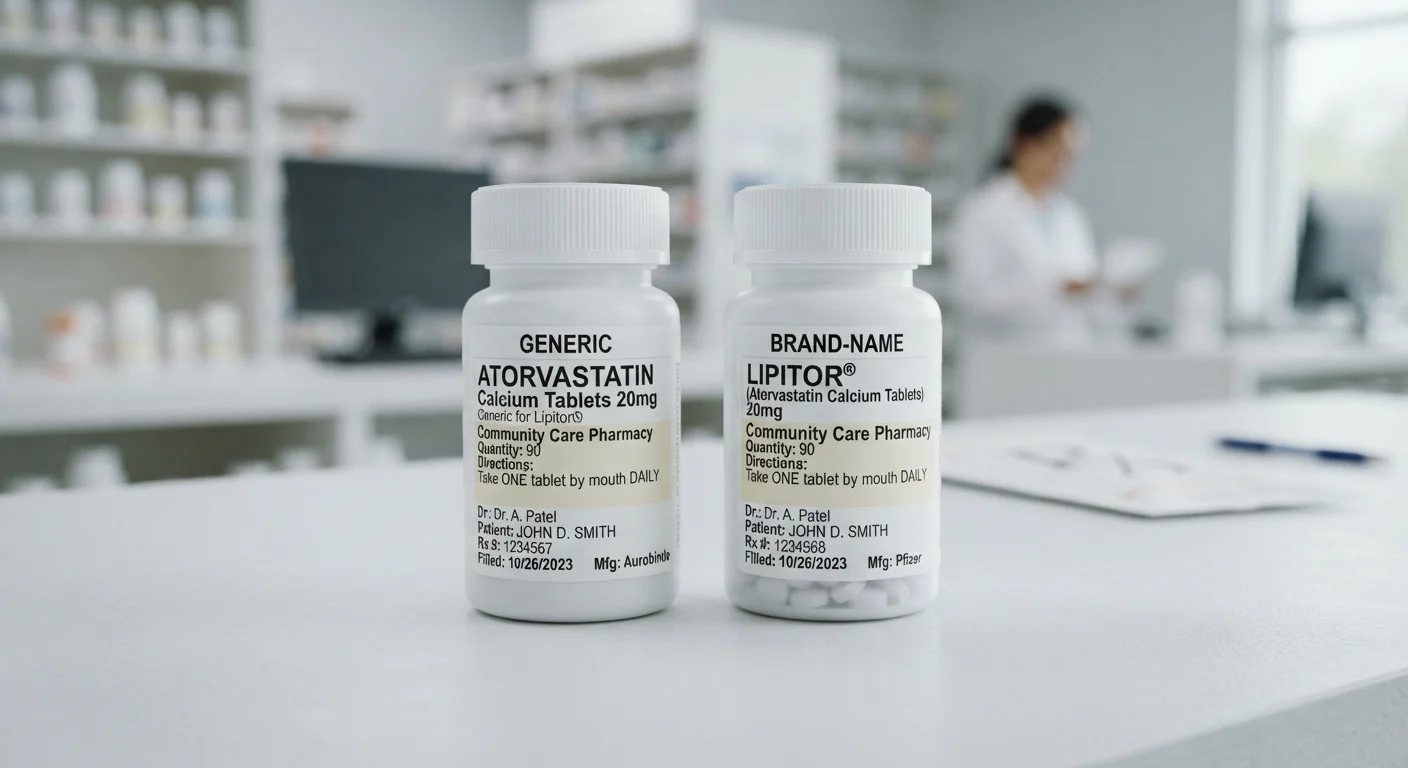
What Makes a Drug Generic?
When a pharmaceutical company develops a new drug, it receives a patent — typically lasting around 20 years — giving it exclusive rights to manufacture and sell that medication. During that window, only the original manufacturer can produce it, and the product carries a brand name.
Once the patent expires, other manufacturers can apply to the U.S. Food and Drug Administration (FDA) to produce a version of the same drug. This is called a generic. To receive approval, the generic must contain the same active ingredient, in the same strength, delivered in the same dosage form (tablet, capsule, liquid), via the same route (oral, topical, etc.).
The FDA also requires the generic to be bioequivalent — meaning the active ingredient is absorbed into the bloodstream at essentially the same rate and to the same extent as the brand-name version. This is the regulatory foundation that allows generics to be considered therapeutically interchangeable for most patients.
For a broader grounding in how drugs are categorized, see our introduction to drug classes for anyone new to managing regular prescriptions.
| Criterion | Brand-Name Medications | Generic Medications |
|---|---|---|
| Active ingredient | Original patented compound | Identical active compound required by FDA |
| Bioequivalence | Reference standard | Must meet FDA bioequivalence criteria |
| Inactive ingredients | Original formulation | May differ (fillers, dyes, binders) |
| Regulatory approval | Full NDA (New Drug Application) | Abbreviated NDA (ANDA) |
| Narrow therapeutic index drugs | Consistent manufacturer baseline | Caution: consult prescriber before switching |
| Availability | During and after patent period | Only after patent expiration |
Where Generics and Brand-Name Drugs Actually Differ
The core difference is not efficacy — it is everything around the active ingredient. Generic manufacturers use different inactive ingredients (also called excipients), which can include binders, fillers, colorants, and coatings. These do not affect the drug's therapeutic action for most people, but they can matter in specific situations.
For example, a person with a sensitivity to certain dyes or a lactose intolerance may respond differently to one manufacturer's formulation than another's. This is less about generic versus brand-name and more about which specific product a pharmacy dispenses — generics from different manufacturers can also differ from each other in their inactive ingredients.
There is one category where extra caution applies: narrow therapeutic index (NTI) drugs. These are medications — such as levothyroxine (a thyroid hormone), warfarin (a blood thinner), and certain seizure medications — where the difference between a therapeutic dose and a harmful one is small. For NTI drugs, even minor absorption variation can have clinical consequences. Healthcare providers often recommend staying on a consistent formulation rather than switching between manufacturers.
Our related article on whether side effects differ between generic and brand-name drugs explores the excipient question in further depth.
~90%
Share of U.S. prescriptions filled as generics
According to the FDA, generics account for approximately 90% of prescriptions dispensed in the United States.
±20%
FDA bioequivalence absorption range (permitted variation)
The FDA's bioequivalence standard allows the generic's absorption to fall within 80–125% of the brand-name drug's — a range that is clinically acceptable for most medications.
12+
Recognized narrow therapeutic index drug categories
Regulatory agencies have identified multiple drug categories — including anticoagulants and antiepileptics — where formulation consistency is especially important.
Making Safe Decisions About Your Medications
For older adults managing multiple prescriptions, consistency is one of the most important principles of medication safety. Switching formulations — even between two bioequivalent products — can occasionally produce subtle changes in how a drug feels or performs for an individual. This does not mean generics are inferior; it means any change is worth flagging with your care team.
Here are practical steps to take if your pharmacy automatically substitutes a generic (which is common and often permitted by law):
- Ask your pharmacist to note in your records which manufacturer's product you are receiving, especially for medications you take long-term.
- If you notice new symptoms after a switch, report them to your prescriber promptly — do not stop the medication without guidance.
- If your prescriber believes a brand-name formulation is medically necessary, they can often indicate "dispense as written" (DAW) on your prescription.
Understanding how a drug is absorbed and delivered also matters. Our guide on immediate-release vs. extended-release tablets explains why formulation type affects both timing and safety.
Finally, individual responses to medications can differ in ways that go beyond the active ingredient. The article "What 'Side Effects May Vary' Actually Means for Your Body" walks through why this happens and what shapes your personal risk profile.
A Note on Automatic Pharmacy Substitution
Most U.S. states permit or require pharmacies to dispense a generic when one is available, unless the prescriber specifies otherwise. This practice is regulated and generally safe, but it means the manufacturer of your medication may change between refills. If you take a medication where consistency is critical — such as a thyroid drug or blood thinner — ask your pharmacist to source the same manufacturer's product each time, and always inform your prescriber of any formulation changes.
This article is for general informational purposes only and does not constitute medical advice. Always consult your pharmacist or prescriber before making any changes to your medication routine.