
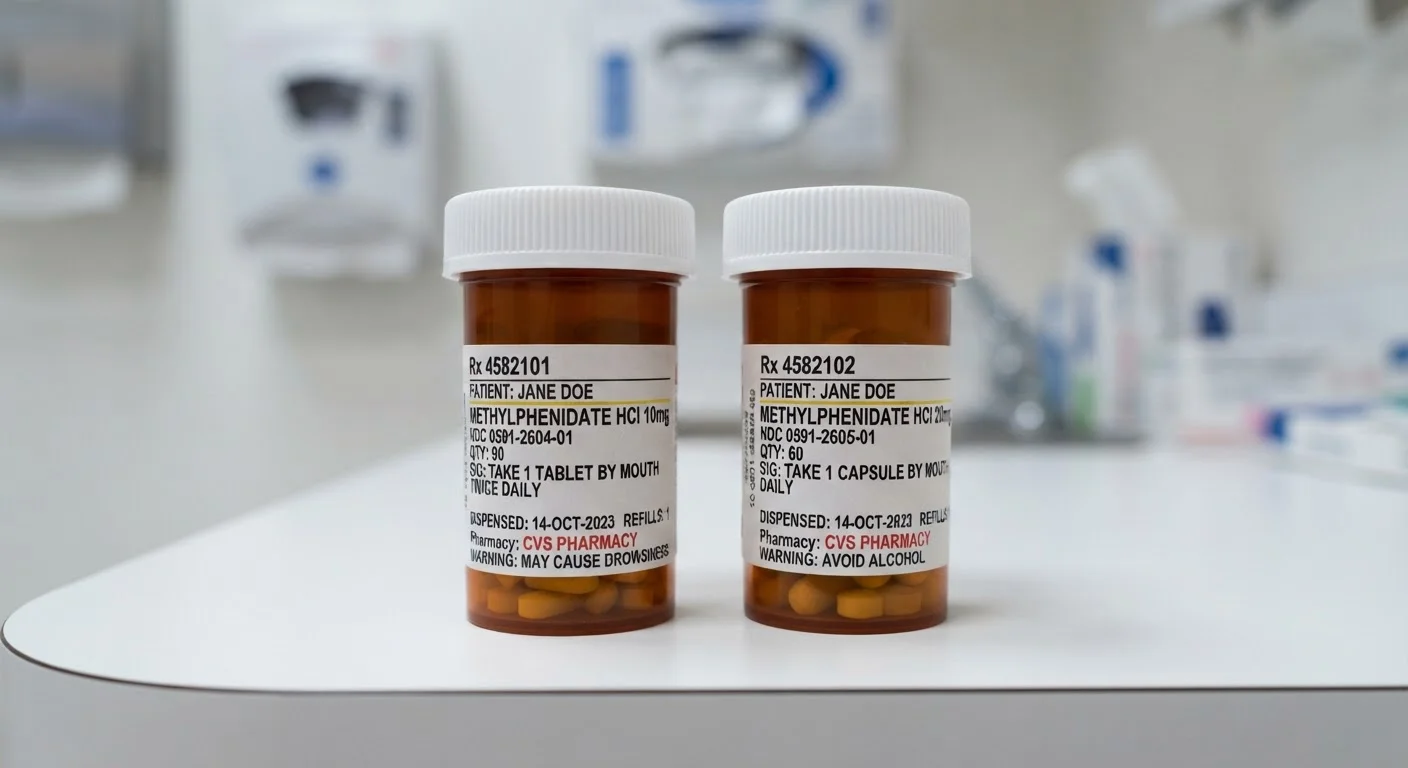
How Each Formulation Delivers Medication
When you pick up a prescription, the abbreviations on the label — IR (immediate-release), XR, ER, or CR (extended- or controlled-release) — describe the mechanism by which the active ingredient enters your bloodstream. Understanding this mechanism helps you take the medication correctly and recognize why your prescriber chose one formulation over another.
Immediate-release tablets are formulated to dissolve quickly in the stomach or small intestine. The active ingredient is absorbed into the bloodstream rapidly, typically within 30 to 60 minutes, producing a relatively sharp rise in drug concentration followed by a gradual decline. Because the drug level falls faster, IR formulations are often prescribed multiple times per day.
Extended-release tablets use a specialized coating, gel matrix, or osmotic pump system to meter out the active ingredient over a longer period — often 8 to 24 hours. The result is a flatter, more sustained concentration curve in the bloodstream. This can translate to fewer doses per day and a more consistent effect for conditions that require around-the-clock coverage.
For a broader look at how prescription labels communicate these and other instructions, see Medication Labels Decoded.
| Criterion | Immediate-Release (IR) | Extended-Release (XR/ER) |
|---|---|---|
| Onset of action | 30–60 minutes (typically) | Slower, gradual onset |
| Duration of effect | Shorter (hours) | Longer (8–24 hours) |
| Typical dosing frequency | Multiple times daily | Once or twice daily |
| Drug level pattern | Peaks and troughs | Steady, sustained levels |
| Can be crushed or split? | Often yes (confirm first) | Generally no — safety risk |
| Common use cases | Acute symptoms, rapid relief | Chronic conditions, daily management |
| Formulation flexibility | More options for adjustment | Less flexible mid-treatment |
Safety Rules That Cannot Be Ignored
The most critical safety point about extended-release tablets is this: never crush, chew, or split them unless your pharmacist or prescriber explicitly confirms it is safe to do so. The slow-release mechanism is built into the tablet's physical structure. Destroying that structure releases the entire dose at once — effectively converting an 8- or 12-hour dose into an immediate, potentially overwhelming surge.
This risk is especially serious with medications that have a narrow therapeutic range, meaning the gap between an effective dose and a harmful one is small. Examples include certain blood pressure medications, psychiatric drugs, and pain relievers. An accidental overdose from a crushed XR tablet can cause severe drops in blood pressure, dangerous heart rhythms, or other serious effects.
~50%
Older adults taking 5+ medications daily
Research published in journals on geriatric pharmacology consistently finds polypharmacy — taking five or more medications — is common in adults over 65, raising the stakes for understanding each drug's formulation.
2–3×
Higher overdose risk from crushed XR opioids
Pharmacological studies note that crushing or tampering with extended-release opioid formulations can release two to three times the intended hourly dose all at once, a recognized source of accidental overdose.
Immediate-release tablets carry their own cautions. Because drug levels peak and then fall, missed doses can leave gaps in coverage — particularly relevant for conditions like high blood pressure or diabetes, where consistency matters. Some IR medications also require food timing to minimize stomach irritation. The article What 'Take With Food' Really Means explains food-timing instructions in plain language.
If you experience unexpected or intensified side effects after a formulation change, consider reading about how clinicians distinguish short-term discomfort from long-term risk to understand what warrants a call to your provider.
Generic XR and IR Formulations Also Differ
When a medication is available in both generic and brand-name forms, the formulation type — IR or XR — must also match your prescription exactly. A generic IR tablet is not interchangeable with a brand-name XR tablet, even if the active ingredient is identical. Always verify the formulation abbreviation when picking up refills. For more on generics, see Generic vs. Brand-Name Medications.
This article is for informational purposes only and is not a substitute for professional medical advice. Always speak with a qualified healthcare provider before making any changes to your medications.