
Why Prescription Labels Deserve a Careful Read
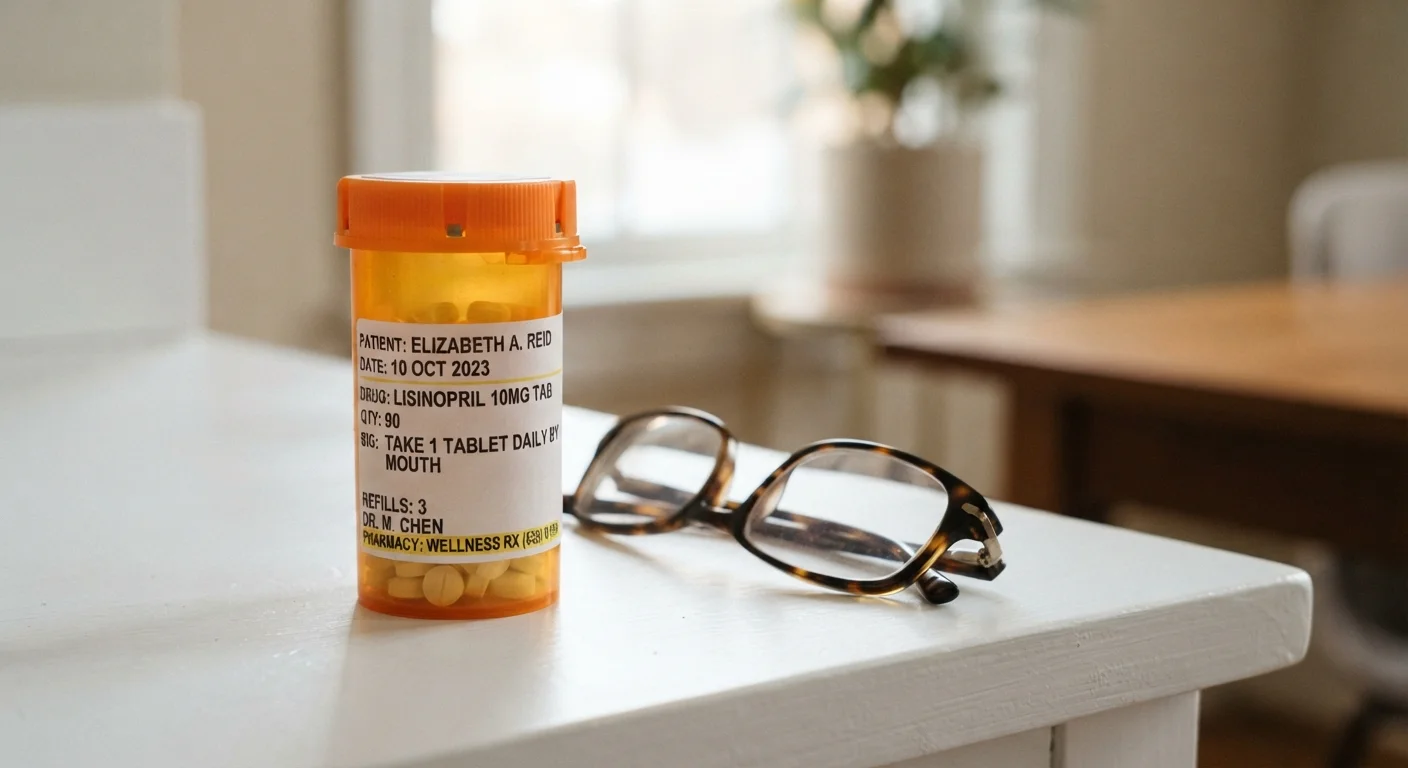
A prescription label is more than a sticker on a bottle — it is a condensed set of legally required instructions that directly affects your safety. Research consistently shows that medication errors at home are often linked to misreading or overlooking label information. For older adults managing multiple prescriptions, building the habit of reading every label carefully can prevent dangerous mistakes.
This guide walks through each standard section of a U.S. prescription label so you know exactly what to look for — and what to do when something is unclear. For a broader look at how to approach label reading as an older adult, see our practical label-reading walkthrough.
| Required label elements (U.S.) | Patient name, drug name, strength, directions, prescriber, pharmacy info, refills, dispensing date (FDA prescription labeling requirements) |
| Most common label misread | Dosage frequency (e.g., confusing "twice daily" with "every 12 hours") (Institute for Safe Medication Practices) |
| Auxiliary warning stickers | Up to 6 may appear on a single bottle (Standard U.S. pharmacy practice) |
| Medications managed by older adults | Adults 65+ take an average of 4–5 prescription drugs daily (AARP Public Policy Institute) |
Breaking Down the Label Section by Section
Most U.S. pharmacy labels follow a consistent layout. Here is what each element means:
- Patient name: Always confirm it matches yours exactly before taking any medication — mix-ups do happen at busy pharmacies.
- Prescribing physician: The name of the licensed provider who authorized this prescription.
- Drug name and strength: This may show the brand name, the generic name, or both. The strength (e.g., 10 mg) tells you the dose per unit.
- Directions for use: This is the most critical section. It specifies how much to take, how often, and under what conditions (e.g., "with food," "at bedtime"). Follow these precisely, not the general instructions you may recall from a previous prescription.
- Quantity dispensed: The total number of pills, milliliters, or patches in the container.
- Refills remaining: Indicates how many times you can refill without a new prescription. A label reading "0 refills" requires you to contact your provider before the pharmacy can dispense more.
- Dispensing date and expiration: The date the prescription was filled, plus any expiration date. Using expired medications can be ineffective or, in some cases, harmful.
To understand what happens after you take that dose, see what happens inside your body when you take a pill.
Generic name
The standardized scientific name of a drug's active ingredient, used regardless of brand. Generic names are the same across all manufacturers of the same medication.
Auxiliary label
A small colored sticker placed on a prescription bottle by the pharmacist to highlight important warnings or instructions — such as food interactions or drowsiness risks.
Refill authorization
The number of times a prescription can be dispensed again without a new order from your prescriber. When refills reach zero, your provider must be contacted before more can be dispensed.
Drug strength
The amount of active ingredient in each dose unit, typically expressed in milligrams (mg) or micrograms (mcg). Two medications with the same name but different strengths are not interchangeable.
Expiration date
The date through which a pharmacist or manufacturer guarantees a medication's full potency and safety. Using medications past this date is generally not recommended.
Auxiliary Labels and Pharmacy Warning Stickers
Many bottles carry small colored stickers — called auxiliary labels — affixed by the pharmacist. These are not optional fine print. They carry specific, evidence-based warnings such as:
- "Do not take with grapefruit or grapefruit juice" — certain medications are processed differently when grapefruit compounds are present, potentially raising drug levels in the blood.
- "May cause drowsiness — use caution when driving" — particularly relevant for antihistamines, muscle relaxants, and some blood pressure medications.
- "Take on an empty stomach" or "Take with food" — food can either reduce absorption or protect the stomach lining, depending on the drug.
- "Avoid prolonged sun exposure" — some medications increase skin sensitivity to UV light.
If a sticker is unclear, your pharmacist is the best immediate resource — they can explain the reasoning behind every warning on the label. For a comprehensive glossary of medication terms you may encounter, visit The Language of Drug Labels: A Plain-English Reference.
When to Call Your Pharmacist
If any label instruction seems to conflict with what your doctor told you verbally, do not guess — call your pharmacy before taking the medication. Pharmacists are medication experts and can quickly clarify discrepancies, check for interaction warnings, and confirm whether a label was printed correctly. This step takes minutes and can prevent a serious error.
Building a Safer Routine Around Your Labels
Reading your label once is a start, but consistency matters most. Consider these practical habits:
- Review the label every time you refill. Dosage instructions can change between refills if your provider adjusted your prescription.
- Keep medications in their original containers. Transferring pills to unlabeled containers removes critical safety information.
- Store medications as directed. Labels may specify "keep refrigerated" or "store below 77°F" — temperature affects how some medications work.
- Note your refill date in advance. Running out of a critical medication unexpectedly is a common and preventable problem.
If you are just beginning to manage regular prescriptions, our guide to understanding drug classes can help you build broader context around what you are taking and why.
For questions about side effects mentioned on your label, our plain-language side effects reference provides accessible explanations by medication class.
This article is for general informational purposes only and does not constitute medical advice. Always consult a licensed healthcare professional or pharmacist with questions about your specific medications, dosages, or health conditions.