
Why Prescription Labels Include Food Instructions
When your pharmacist hands you a bottle with a sticker that reads "take with food," that instruction reflects specific pharmacological reasoning — not a general wellness suggestion. Food instructions on prescription labels are part of your prescribed regimen, and they exist for one or more of the following reasons: to shield your stomach from irritation, to ensure the drug is absorbed correctly, or to maintain consistent drug levels in your body.
Prescription labels contain several layers of instructions, and food-related directions are among the most commonly misunderstood. Many older adults treat them as polite suggestions rather than clinical guidance — and that misunderstanding can lead to preventable side effects or reduced medication effectiveness.
"With Food" Is Not the Same as "With Any Drink"
Water is almost always the recommended beverage for swallowing tablets or capsules. Some drinks — including grapefruit juice, milk, and alcohol — can interfere with drug absorption or metabolism in ways that water does not. Unless your pharmacist specifies otherwise, use plain water to take your medications, even when food is required alongside them.
What Counts as 'Food'?
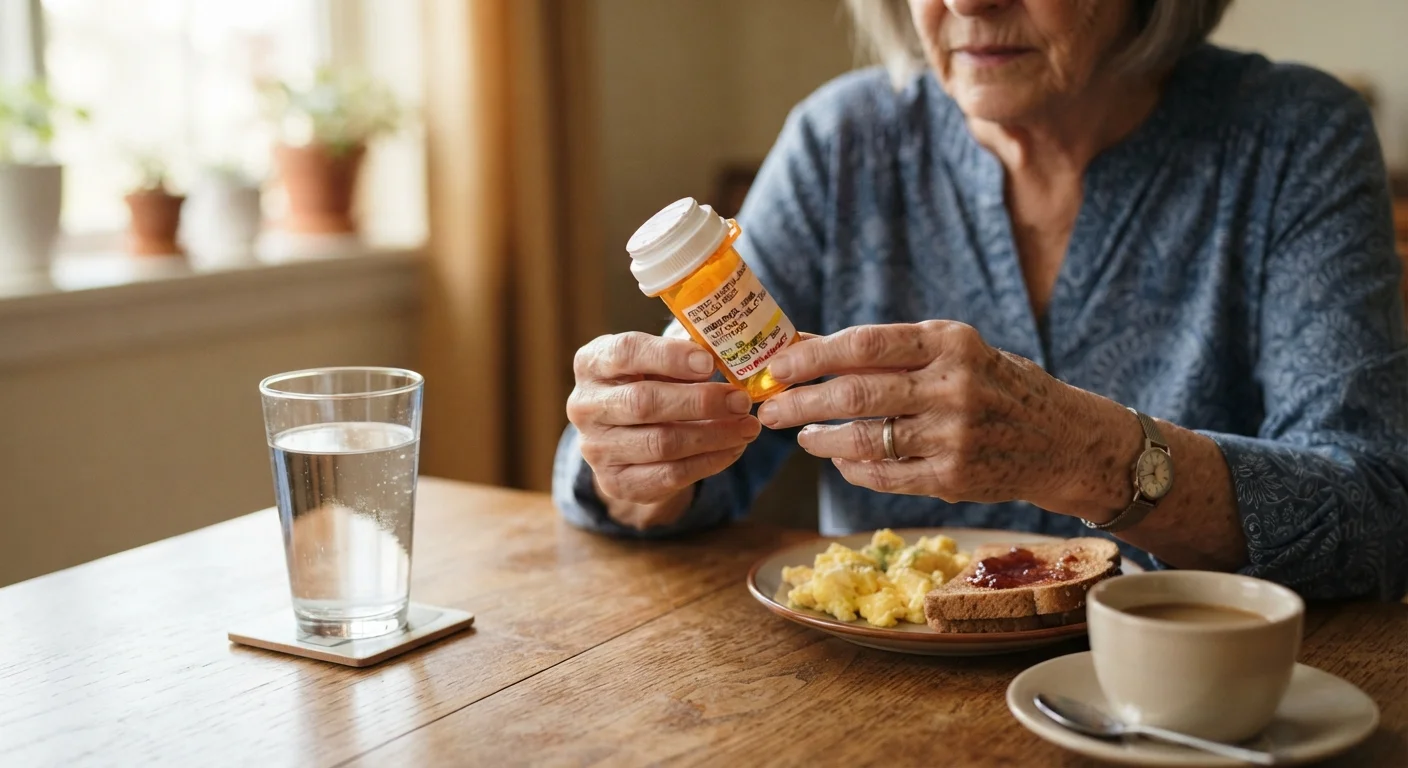
"Take with food" does not automatically mean a full sit-down meal. For the majority of medications, a small snack — a piece of toast, a few crackers, or a small serving of yogurt — is enough to protect your stomach and support absorption. The goal is to have something in your gastrointestinal system so the drug is not entering an empty, acidic environment.
However, some medications specify more precisely. Certain drugs — particularly some antifungal medications and specific HIV antiretrovirals — require a high-fat meal to be absorbed properly. In those cases, a light snack is genuinely not sufficient. If your label says "take with a full meal" or "take with a high-fat meal," that phrasing is deliberate.
To understand the broader science of how food changes drug behavior, see our article on why some medications must be taken with food and others on an empty stomach.
When in Doubt, Ask Your Pharmacist
Pharmacists are trained specifically in drug interactions — including how food affects medications. If your label says "take with food" and you are unsure what qualifies, a quick question at the pharmacy counter or by phone can prevent avoidable side effects. This is especially important if you are managing multiple medications at once.
Drugs Where This Instruction Matters Most
Not every medication has a meaningful food interaction, but several common drug classes do. Understanding which categories are most affected helps you build safer daily habits.
- NSAIDs and corticosteroids (such as ibuprofen or prednisone): These can irritate the stomach lining and even increase the risk of gastrointestinal bleeding when taken without food.
- Metformin (used for type 2 diabetes): Taking it with meals reduces the common side effect of nausea and gastrointestinal discomfort.
- Certain antibiotics: Some must be taken with food to reduce stomach upset; others, like doxycycline, require food specifically to reduce the risk of esophageal irritation.
- Iron supplements: Often better tolerated with food, though food can reduce absorption — your prescriber will guide you on the right balance.
Food can also create problems for some medications. Grapefruit, for instance, interferes with an enzyme that breaks down many drugs, leading to unexpectedly high drug levels. Learn more about how food, drink, and supplements can alter a drug's effect.
~50%
Older adults who misread or misapply label instructions
Research published in patient safety literature suggests roughly half of older adults misinterpret at least one prescription label instruction, including food-related directions.
3–5x
Increased GI bleeding risk with NSAIDs on empty stomach
Gastroenterology guidelines note that the risk of gastrointestinal complications from NSAIDs increases meaningfully when these drugs are taken without food or gastroprotective agents.
Building a Consistent Routine
Consistency is one of the most practical tools you have for managing medications safely. Taking a drug at roughly the same time each day — and pairing it with the same meal or snack — helps maintain stable drug levels in your bloodstream and reduces the chance of forgetting or misapplying the food instruction.
Medication timing affects more than just convenience — it can influence how well a drug works and how your body tolerates it. Linking your medication to an established mealtime habit is one of the most reliable ways to stay on schedule.
If your appetite is irregular or you skip meals often — which is common among older adults — speak with your pharmacist. They can help you identify whether a light snack is sufficient for your specific medication, or whether a different dosing time might work better with your eating patterns. This is a clinical conversation worth having, not a detail to guess at.
This article is for general health education only and is not a substitute for personalized medical advice. Always consult your pharmacist or healthcare provider before making changes to how or when you take your medications.