
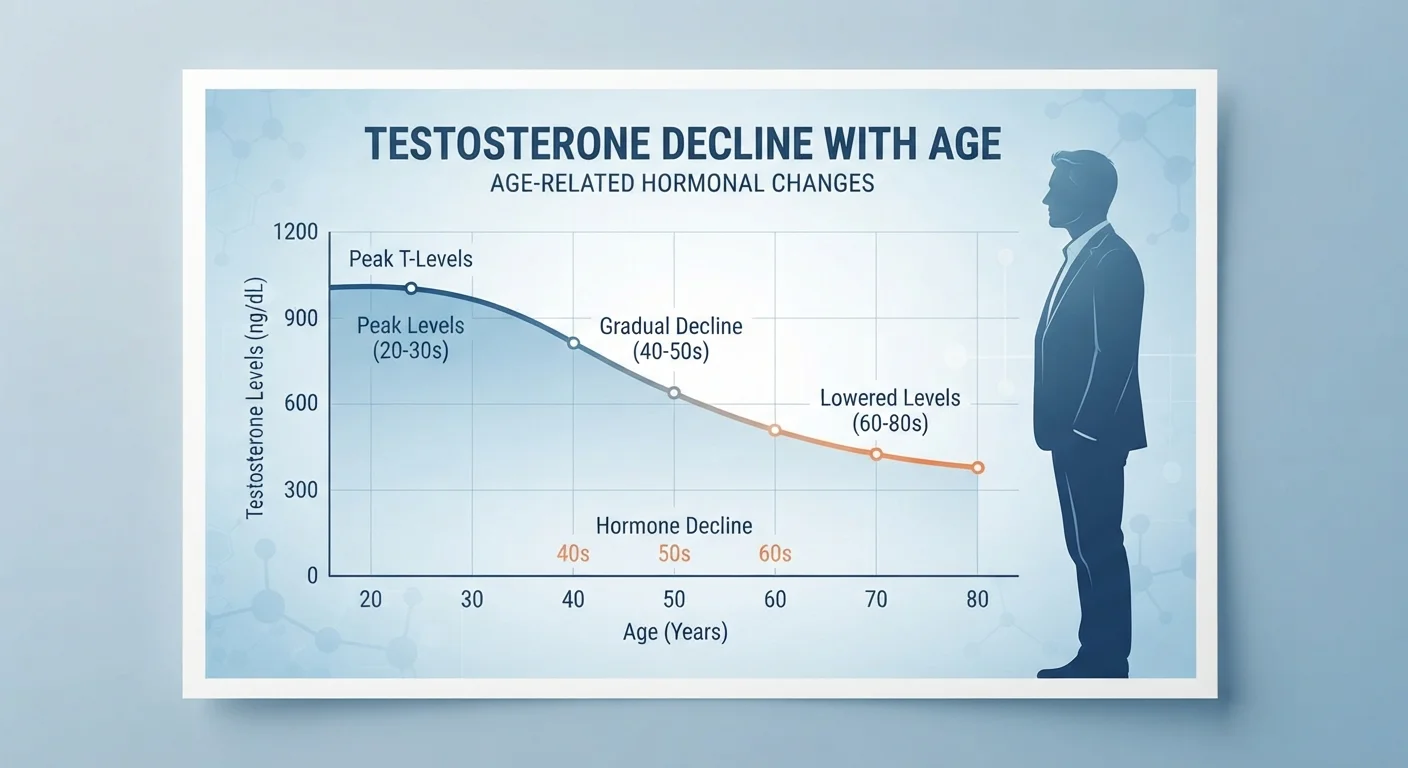
How Testosterone Changes With Age — and What's Considered Normal
Testosterone production peaks in early adulthood and begins a slow, steady decline starting around age 30. Most clinical guidelines characterize this as a drop of approximately 1–2% per year — a pace that is gradual enough that many men notice little functional change for decades. This pattern, sometimes called age-associated hypogonadism or late-onset hypogonadism in research literature, is distinct from the abrupt hormonal shifts seen in younger men with testicular or pituitary disorders.
For most aging men, this decline is not a disease. It is a predictable biological process, much like the gradual reduction in bone density or cardiovascular reserve that also occurs with age. Testosterone and the Aging Male Body explores this trajectory in depth and explains what changes in energy, mood, and body composition are genuinely tied to hormonal shifts.
The challenge for both men and clinicians is that the symptoms of natural decline — reduced energy, changes in libido, mild mood shifts — overlap considerably with those of clinical hypogonadism. Context, severity, and lab confirmation together determine which category applies.
| Criterion | Normal Age-Related Decline | Hypogonadism (Clinical Low T) |
|---|---|---|
| Rate of change | Gradual, ~1–2% per year | May be more pronounced or abrupt |
| Testosterone level | Low-normal range for age | Consistently below clinical threshold |
| Symptom severity | Mild or absent | Significant, functionally impairing |
| Diagnosis required | Not a medical condition | Requires confirmed labs + symptoms |
| Common contributing factors | Normal aging biology | Obesity, sleep apnea, diabetes, medications |
| Typical clinical action | Monitoring, lifestyle guidance | Further evaluation, treat underlying cause |
What Clinicians Look for When Evaluating Low Testosterone
Clinical hypogonadism is defined by two criteria acting together: a persistently low serum testosterone level and symptoms that are functionally significant. Neither criterion alone is sufficient. A man with a borderline-low reading but no symptoms is not typically a candidate for treatment. Conversely, symptoms without lab confirmation do not establish the diagnosis.
Most guidelines recommend measuring total testosterone on at least two separate morning blood draws — ideally fasting — because levels fluctuate across the day, peaking in the morning. A single low result can reflect temporary factors such as illness, poor sleep, or recent stress rather than a true deficiency.
~1–2%
Annual testosterone decline after age 30
This estimate is widely cited in endocrinology literature and reflects the gradual nature of age-related hormonal change in most men.
2 draws
Minimum blood tests needed for diagnosis
Major clinical guidelines, including those from the American Urological Association, recommend confirming low levels on at least two separate morning samples.
~20–40%
Prevalence of low testosterone in men with obesity
Research consistently shows that adiposity suppresses testosterone, making lifestyle factors a key consideration before attributing low levels to aging alone.
Clinicians also investigate underlying causes. Low testosterone in older men can stem from obesity, obstructive sleep apnea, type 2 diabetes, or medications — all of which are potentially treatable. Why Energy Levels Drop With Age explains how these overlapping factors make attribution genuinely difficult. Addressing the root cause sometimes restores testosterone without any hormone therapy at all.
It's also worth noting that testosterone does not act in isolation. other hormones such as cortisol, DHEA, and thyroid hormone shift with age and can produce strikingly similar symptoms, further complicating the clinical picture.
Why the Distinction Matters — and What to Do Next
Conflating normal aging with clinical hypogonadism has practical consequences. Overdiagnosis can lead men toward treatments that carry real risks — including effects on cardiovascular health, fertility, and red blood cell production — when the underlying issue may be lifestyle-related or due to another condition altogether. Many widely held beliefs about 'Low T' are based on marketing rather than evidence, and separating fact from myth is an important first step.
Underdiagnosis is equally problematic. Men who dismiss significant symptoms as simply «getting older» may delay evaluation of treatable conditions — whether hormonal or otherwise. Low mood and fatigue in later life are not always a testosterone issue; clinical depression is a separate, highly treatable condition that requires its own assessment.
If you're concerned about your symptoms, the most useful step is a candid conversation with your primary care physician or a urologist or endocrinologist. Bring a clear description of your symptoms, their duration, and any relevant lifestyle factors. Avoid self-diagnosing based on symptoms alone, and be cautious of direct-to-consumer hormone testing that lacks clinical context.
This article is for general informational and educational purposes only and does not constitute medical advice. Always consult a qualified healthcare professional for personal medical concerns, diagnosis, or treatment decisions.