
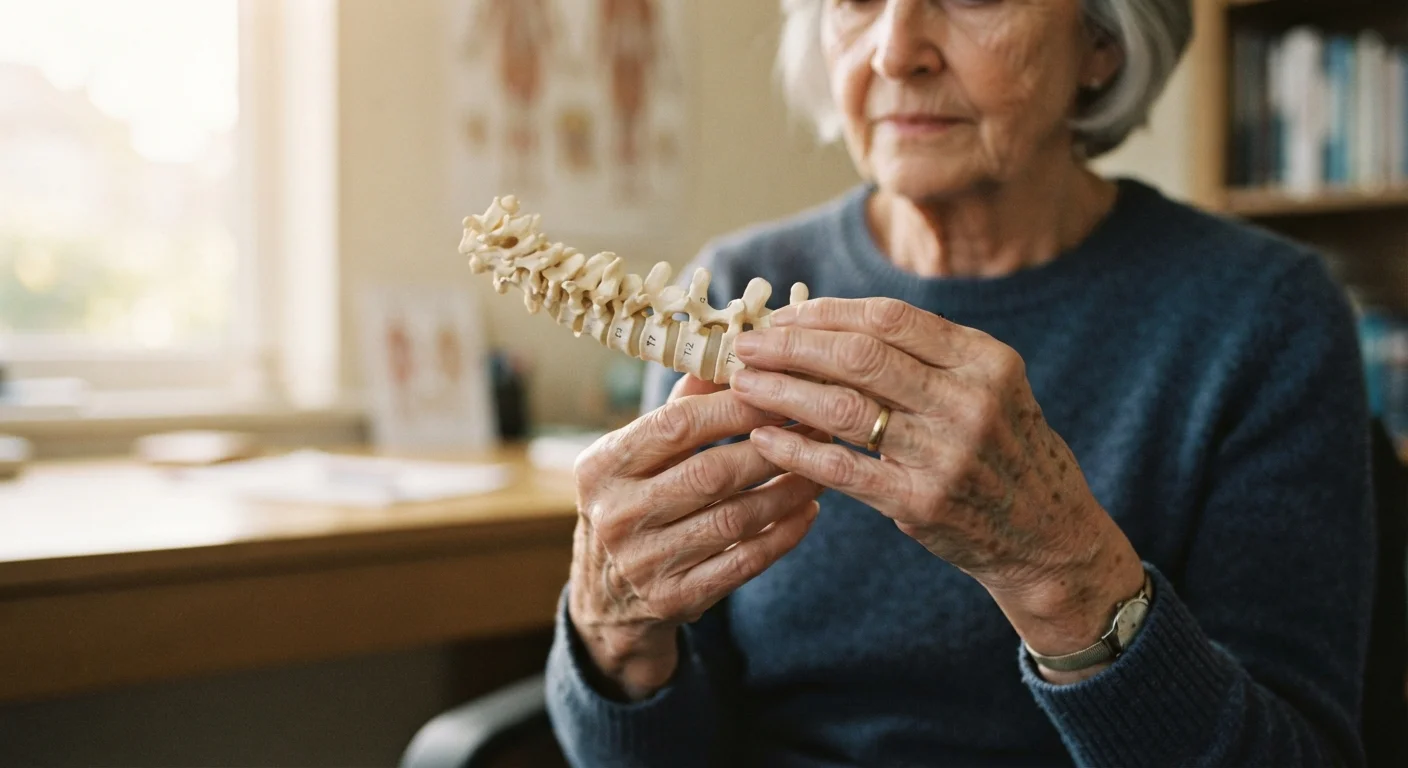
Why Estrogen Is Central to Bone Health
Estrogen does far more than regulate the menstrual cycle. It plays a critical role in maintaining the balance between two types of bone cells: osteoblasts, which build new bone, and osteoclasts, which break old bone down. Throughout a woman's reproductive years, estrogen keeps osteoclast activity in check, preserving bone density.
When estrogen levels fall sharply at menopause — typically occurring around age 51 in the U.S. — that protective brake is released. Bone breakdown begins to outpace bone formation at a rate the body cannot compensate for naturally. This shift is the biological root of postmenopausal bone vulnerability.
Understanding this mechanism matters because it explains why bone loss after menopause is fundamentally different from the gradual, age-related bone thinning that affects both men and women over time. As part of the broader picture of how skeletal risks change across a woman's life, this transition is one of the most consequential: see how cardiovascular and skeletal risks evolve across women's life stages for a fuller view.
Perimenopause Can Also Affect Bone Density
Bone loss doesn't begin only at the final menstrual period. During perimenopause — the transition phase that can last several years — estrogen levels begin to fluctuate and gradually decline, and bone changes can begin during this period too. Women in their mid-to-late forties should be aware that skeletal health is already shifting, even before menopause is confirmed.
The Silent Window: What Happens in the First Decade
Research consistently shows that the most dramatic bone loss occurs within the first five to seven years after the final menstrual period. During this window, a woman can lose a significant proportion of her bone mass — and most of the time, she feels nothing at all.
Up to 20%
Bone density lost in early postmenopause
According to the National Osteoporosis Foundation, women may lose up to 20% of their bone density in the five to seven years following menopause.
1 in 2
Women over 50 who will experience an osteoporotic fracture
The American Academy of Orthopaedic Surgeons estimates that one in two women over age 50 will sustain a fracture related to osteoporosis in their lifetime.
~51 years
Average age of menopause in the U.S.
The average age of natural menopause in American women is approximately 51, according to the North American Menopause Society.
There are no early warning sensations. Bones don't ache as they thin. This is why postmenopausal bone loss is described as a silent condition — and why healthcare providers emphasize routine screening rather than waiting for symptoms. A fracture of the wrist, spine, or hip is often the first sign that bone density has declined to a dangerous threshold.
Vertebral fractures — small collapses in the spinal bones — can cause a gradual loss of height and a curved posture, but these changes are often attributed to normal aging rather than recognized as signs of bone fragility. Awareness of this silent progression is the first step toward taking it seriously.
Factors That Influence How Much Bone You Lose
Not all women experience the same degree of postmenopausal bone loss. Several factors shape individual risk:
- Peak bone mass: Women who built higher bone density during their twenties start with more reserve. Genetics, nutrition, and physical activity during youth all contribute.
- Body weight: Very low body weight is associated with lower bone density. Weight-bearing activity, even walking, signals the skeleton to maintain mass.
- Smoking: Smoking is linked to lower estrogen levels and impaired bone formation. It is an independent risk factor for fracture.
- Alcohol use: Heavy alcohol consumption interferes with calcium absorption and bone remodeling.
- Nutrition: Calcium and vitamin D are essential for bone maintenance. Many older women do not get enough of either through diet alone — a topic explored in depth at what older women should know about calcium and vitamin D.
- Early menopause: Women who reach menopause before age 45 — whether naturally or due to surgery — have a longer postmenopausal window and face a higher cumulative risk.
Build Bone Awareness Before Symptoms Appear
Don't wait for a fracture to prompt a conversation about bone health. If you are postmenopausal or approaching menopause, ask your healthcare provider whether a baseline bone density scan is appropriate for you. Early detection gives you and your care team the widest range of options.
From Bone Loss to Diagnosis: Understanding the Spectrum
Reduced bone density exists on a spectrum. Clinically, two terms are used to describe where a woman falls on that spectrum: osteopenia (lower-than-normal bone density, but not yet at fracture-risk thresholds) and osteoporosis (significantly reduced density that substantially raises fracture risk). These are distinct diagnoses with different clinical implications — learn the key differences between osteopenia and osteoporosis.
A DEXA scan quantifies bone density and produces a T-score — a number comparing your bone density to that of a healthy young adult. Your healthcare provider can interpret your T-score in the context of your full health history, age, and other risk factors to determine next steps.
The good news is that bone health is not entirely beyond your influence. Nutritional choices, physical activity, and — when appropriate — medical treatment can all slow further loss. Eating for bone health is one practical area where many women can make meaningful changes.
This article is for general informational purposes only and does not constitute medical advice. Please consult a qualified healthcare provider for guidance tailored to your personal health circumstances, especially regarding screening, supplementation, or treatment decisions.