
The Biology Behind Cartilage's Slow Recovery
When you strain a muscle, your body rushes blood — carrying oxygen, immune cells, and repair proteins — directly to the site of injury. Recovery begins within hours. Cartilage works on an entirely different set of rules.
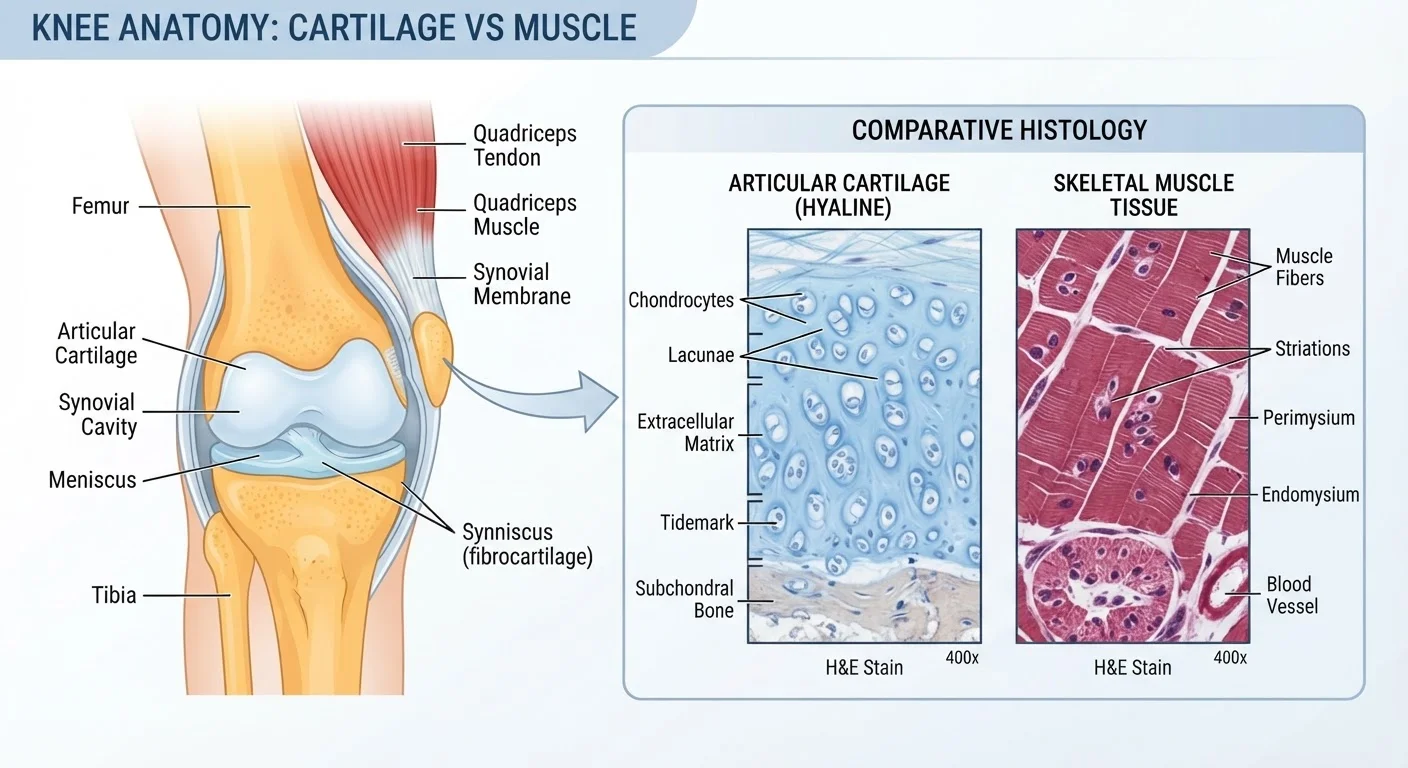
Cartilage is largely avascular: it has no dedicated blood vessels. Instead, it relies on synovial fluid — the lubricating liquid inside your joints — to deliver nutrients. This fluid only penetrates cartilage effectively when the joint moves. That means sedentary periods literally starve cartilage of what it needs to stay healthy.
Cartilage cells, called chondrocytes, are sparsely distributed throughout the tissue and have limited ability to multiply. When damage occurs, there simply aren't enough active repair cells nearby, and no blood supply to recruit more. The result: slow, incomplete, or absent healing — especially in older adults whose chondrocyte activity has already declined.
Why Synovial Fluid Matters So Much
Synovial fluid is the joint's internal lubricant and nutrient medium. It is produced by the joint lining (synovium) and fills the space between cartilage surfaces. Movement compresses and releases cartilage like a sponge, drawing this fluid in and pushing waste products out. Reduced movement means reduced nutrient exchange — a key reason why prolonged inactivity accelerates cartilage deterioration.
This biological reality is why understanding what happens inside a worn joint matters — cartilage loss in osteoarthritis is not a sudden event but a gradual erosion that the body struggles to reverse.
What This Means for Your Joints Every Day
Because cartilage cannot reliably self-repair, the damage you accumulate over years tends to be cumulative. Small stresses — repeated joint loading in poor posture, prolonged sitting, or improper movement patterns — add up in ways that muscle strain typically does not.
Everyday habits that quietly wear down your joints may seem harmless in the short term, but over months and years they create wear patterns that cartilage cannot correct on its own.
Move Gently — Every Day Counts
Short bouts of low-impact movement throughout the day — even a 10-minute walk — help circulate synovial fluid and keep cartilage nourished. Waiting until pain becomes severe before becoming active often means cartilage has already lost significant ground. Speak with your healthcare provider about movement options suited to your current joint health.
Conversely, gentle daily movement — walking, swimming, or cycling — keeps synovial fluid circulating and actively nourishes cartilage. Movement is not just exercise; it is cartilage nutrition.
Excess body weight compounds the problem. The knee joint bears roughly three to four times your body weight during normal walking. Even modest reductions in load can meaningfully slow cartilage wear over time, though any weight management approach should be discussed with a healthcare professional.
Prevention as the Primary Strategy
Given cartilage's limited regenerative capacity, the most effective approach is protecting what you have. This is not pessimistic — it is empowering, because many of the factors that accelerate cartilage wear are modifiable.
~1%
Proportion of cartilage volume made up of cells
Chondrocytes make up only about 1–5% of cartilage volume, contributing to its inherently low repair capacity compared to more cellular tissues like muscle.
3–4×
Body weight load on knee cartilage when walking
Research in biomechanics consistently shows that knee cartilage bears multiples of body weight during normal gait, underscoring why load management matters for long-term cartilage preservation.
Maintaining a consistent, low-impact movement routine supports both joint fluid circulation and the surrounding muscles that absorb mechanical stress before it reaches cartilage. Strong quadriceps, for example, significantly reduce the load transmitted through the knee.
It also helps to be aware of how certain daily patterns affect your joints. Habits that quietly make joint pain harder to manage often involve posture, rest patterns, and pacing — none of which require medical treatment, but all of which benefit from awareness and adjustment.
If you are already experiencing joint discomfort, understanding what is actually happening inside your joints can help you make more informed decisions alongside your healthcare provider — and avoid common misconceptions that delay relief. Common misconceptions about joint pain — such as the belief that all exercise worsens joint damage — can lead people away from the very habits that help most.
This article is for general informational and educational purposes only and does not constitute medical advice. Always consult a qualified healthcare professional for personal health concerns, diagnosis, or treatment decisions.