
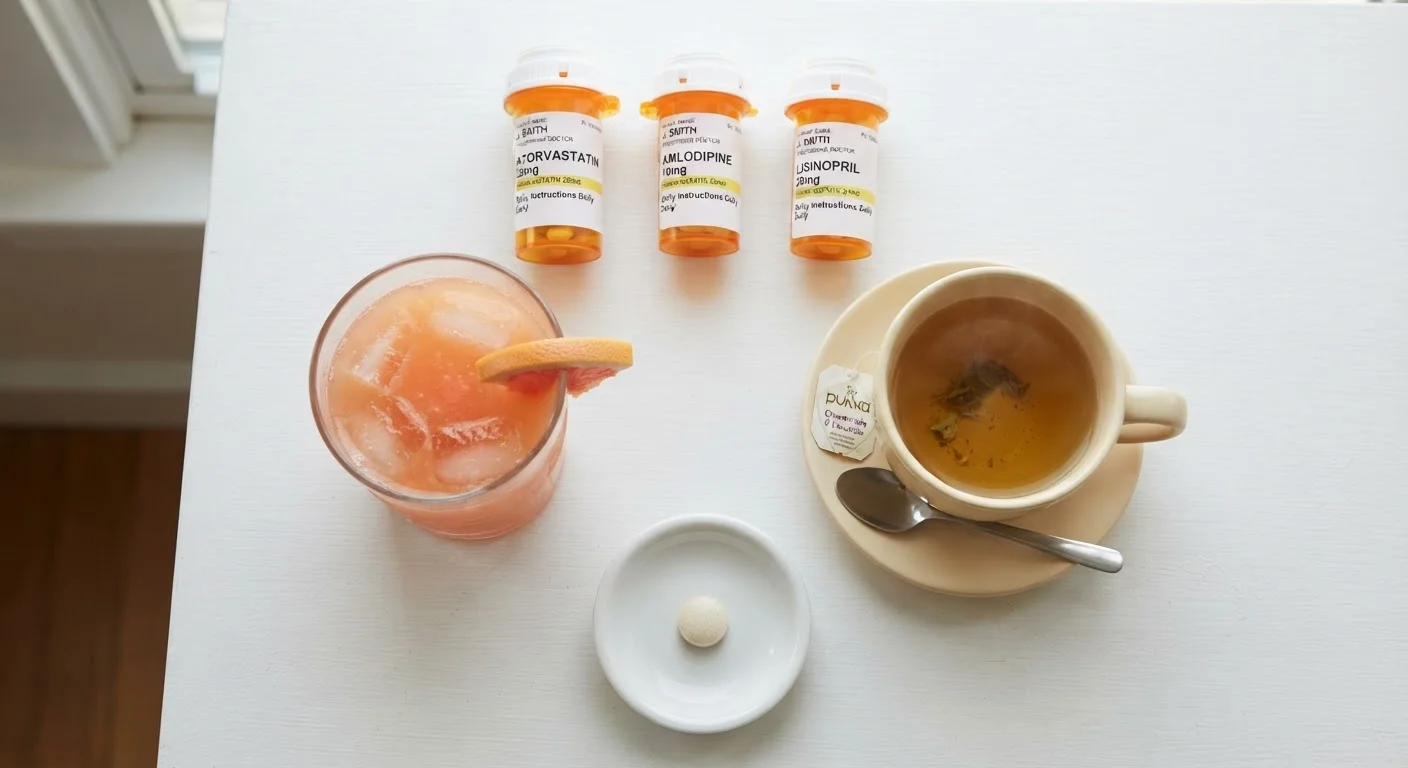
Why What You Consume Can Change What Your Medication Does
When a medication is prescribed, it is calibrated to work within a specific range of conditions — including how quickly it is absorbed into the bloodstream and how efficiently the body processes it. Introducing food, drink, or supplements into that equation can shift those conditions in ways that matter clinically.
These interactions work through several mechanisms. Some substances physically bind to drug molecules in the digestive tract, preventing absorption. Others speed up or slow down the liver enzymes responsible for breaking drugs down. A few directly compete with medications for the same biological pathways. Understanding these mechanisms helps explain why label instructions about food are not arbitrary — they reflect documented science. For a closer look at what those label instructions really mean, see what 'take with food' really means.
85+
Medications that interact with grapefruit
Research published in the Canadian Medical Association Journal identified more than 85 drugs with clinically significant grapefruit interactions, with roughly half capable of causing serious adverse effects.
~40%
Older adults regularly using supplements alongside prescriptions
Studies of community-dwelling older adults in the U.S. have consistently found that a large proportion use dietary supplements concurrently with prescription medications, often without informing their providers.
24 hrs
Duration of grapefruit's enzyme-blocking effect
Grapefruit's inhibitory effect on the CYP3A4 enzyme can persist for up to 24 hours after a single serving, making timing adjustments alone an unreliable strategy.
Grapefruit and Citrus: A Well-Known but Often Overlooked Risk
Grapefruit is one of the most studied and most significant food-drug interactions. It contains natural compounds — furanocoumarins — that inhibit CYP3A4, an enzyme in the liver and intestinal wall that metabolizes a wide variety of drugs. When this enzyme is blocked, less of the drug is broken down before entering the bloodstream, causing drug levels to rise higher than intended.
Affected drug classes include certain cholesterol-lowering statins, some calcium channel blockers used for blood pressure, immunosuppressants, and specific anxiety medications, among others. Crucially, the effect can persist for up to 24 hours after consuming grapefruit — meaning spacing out your juice and your pill is not a reliable workaround. Seville oranges and pomelos carry a similar risk.
Check Before You Sip or Supplement
If your medication package insert lists a food or drink restriction, take it seriously — even if you have consumed that item for years without obvious problems. Ask your pharmacist for a printed list of specific foods and supplements to avoid with each of your medications. Keeping this list visible in your kitchen can prevent easy-to-miss daily interactions.
Alcohol, Caffeine, and Dairy: Common Drinks That Interact
Alcohol is the most widely encountered beverage interaction risk. It can amplify the sedating effects of sleep aids, antihistamines, and anxiety medications; impair blood sugar control in people taking diabetes drugs; and increase bleeding risk for those on anticoagulants. Because older adults metabolize alcohol more slowly, even modest intake can produce stronger effects. For more on why age shapes these responses, see why older adults react differently to medications.
Dairy products and calcium-fortified foods can reduce the absorption of certain antibiotics — particularly tetracyclines and fluoroquinolones — by binding to the drug in the gut before it can be absorbed. Caffeine, meanwhile, can interact with some medications that slow its breakdown, causing elevated caffeine effects such as rapid heartbeat or anxiety.
Herbal Supplements: 'Natural' Does Not Mean Neutral
A common misconception is that plant-based supplements are inherently safe alongside prescription drugs. In practice, many herbs contain pharmacologically active compounds that engage the same biological systems as medications.
St. John's Wort, widely used for mood support, is a potent inducer of CYP enzymes and the drug transporter P-glycoprotein. This means it accelerates the breakdown of many drugs — including certain antidepressants, antiretrovirals, blood thinners, and oral contraceptives — reducing their effectiveness. Garlic and ginkgo supplements can increase bleeding risk, particularly in people already taking anticoagulants like warfarin. Fish oil in high doses may have a similar effect. Vitamin K found in supplements and green vegetables like kale and spinach can counteract blood-thinning medications that depend on controlling vitamin K activity.
Because supplements are not required to carry the same interaction warnings as prescription drugs, it falls to the patient and their care team to surface these risks. The hub on how medications work offers additional context on how drugs interact with body systems.
Supplement Labeling Gaps
Unlike prescription drugs, dietary supplements in the U.S. are not required by law to list drug interaction warnings on their labels. This regulatory difference means the responsibility to identify and disclose supplement use falls primarily on the consumer and their healthcare team. Treating supplements as 'medications' in conversations with your pharmacist is the safest practice.
How to Reduce Your Risk
The most effective protective step is full disclosure. Tell every prescriber and your pharmacist about all supplements, vitamins, herbal products, and dietary habits — including alcohol consumption and whether you regularly eat grapefruit or large quantities of leafy greens. Do not assume that over-the-counter products are too minor to mention.
Read the medication guide that comes with each prescription. Interaction warnings specific to that drug are listed there. If you take several medications, a pharmacist-led medication review can identify food and supplement interactions that may not be obvious. This is especially worthwhile if you are managing multiple conditions — a situation explored further in polypharmacy and drug interactions. Your liver and kidneys do the work of processing both drugs and dietary compounds, and understanding their role can be illuminating — see why the kidneys and liver matter so much.
This article provides general health information for educational purposes only and is not a substitute for professional medical advice. Always consult your doctor, pharmacist, or qualified healthcare provider before making any changes to your medications or diet.