
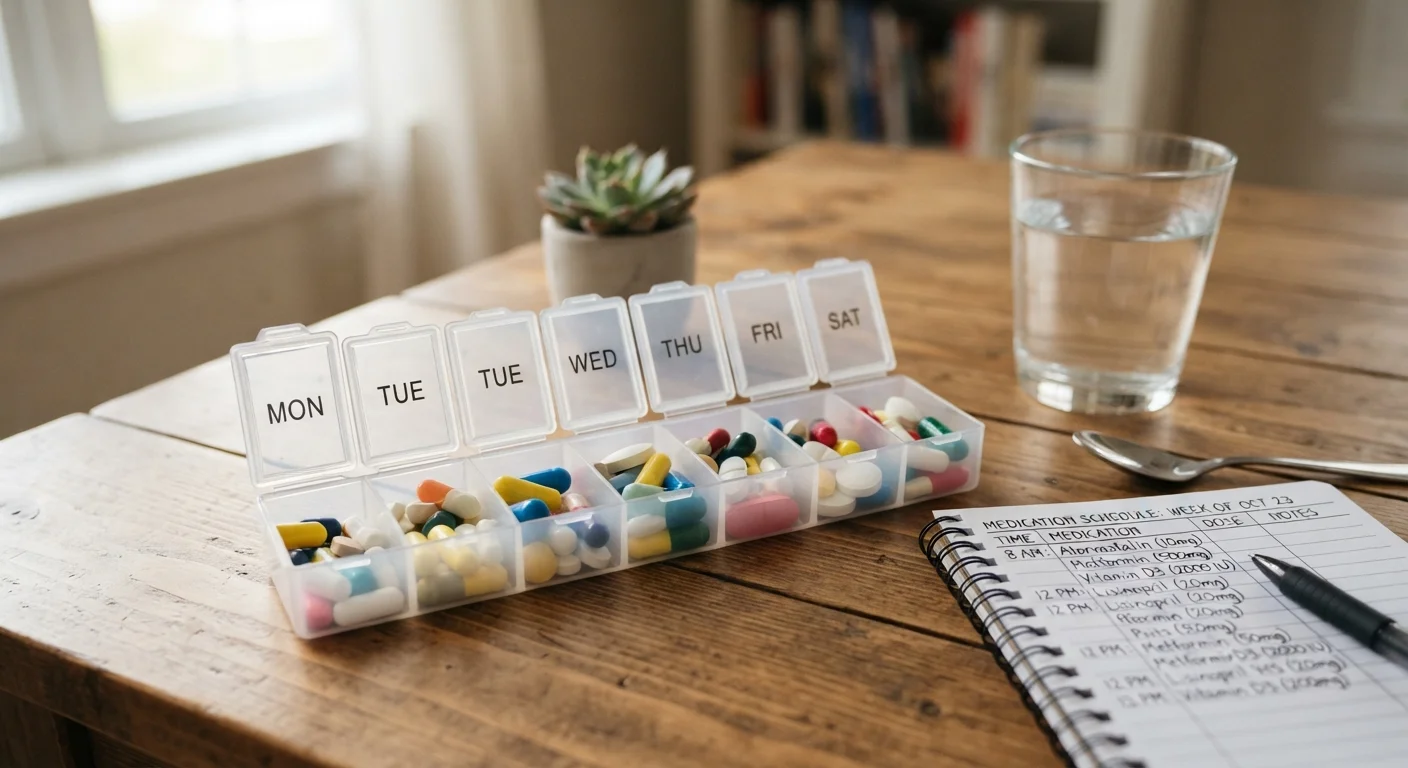
What Is Polypharmacy?
Polypharmacy is the term clinicians use when a person regularly takes five or more medications at the same time. While that threshold might sound high, it is reached more often than many people realize — especially among adults managing conditions such as high blood pressure, type 2 diabetes, heart disease, and arthritis simultaneously. Each condition may carry its own prescription, and over-the-counter products or supplements often get added on top.
Polypharmacy is not automatically unsafe — sometimes multiple medications are all necessary and appropriate. The concern is that as the number of drugs in a regimen grows, so does the complexity of how those drugs interact with one another and with the body.
Polypharmacy
The concurrent use of five or more medications by one individual, whether prescription, over-the-counter, or supplemental. It raises the statistical likelihood of interactions and side effects.
Drug interaction
A change in the way one drug behaves when another substance — a medication, supplement, or food — is present at the same time. Interactions can reduce effectiveness, increase toxicity, or create new unwanted effects.
Pharmacokinetics
The process by which the body absorbs, distributes, breaks down, and eliminates a drug. Age-related changes in these steps are a major reason older adults are more sensitive to medication effects.
Therapeutic duplication
When two or more medications from the same drug class are prescribed together, sometimes unintentionally, leading to an excess of the same type of drug effect.
Adverse drug event
Any harmful or unintended outcome connected to medication use, ranging from a mild rash to a serious medical emergency. Interactions are a leading cause of preventable adverse events.
How Drug Interactions Develop
Drug interactions fall into a few broad categories worth understanding:
- Pharmacokinetic interactions — One drug alters how the body absorbs, distributes, metabolizes, or eliminates another. A classic example involves enzymes in the liver (especially the CYP450 system) that break down many medications. If one drug speeds up or slows down these enzymes, it changes the effective level of another drug in the bloodstream.
- Pharmacodynamic interactions — Two drugs produce effects on the same body system, amplifying or canceling each other. For instance, combining two medications that each lower blood pressure can cause an excessive drop.
- Therapeutic duplication — Two drugs from the same class are prescribed, sometimes without either prescriber realizing it, resulting in a doubled dose effect.
Food, drink, and supplements also play a role. Certain foods and supplements can significantly alter a drug's effect, including well-known examples like grapefruit juice affecting some cholesterol and blood pressure medications.
Over-the-Counter Drugs Count Too
Many people assume that only prescription medications carry interaction risks. In practice, common over-the-counter drugs — including aspirin, antacids, antihistamines, and ibuprofen — can interact with prescription medications in clinically significant ways. Always include every product you take, including vitamins and herbal products, when providing your medication list to any healthcare provider.
Why Older Adults Face Higher Risks
The aging body handles medications differently than a younger one, and those differences matter. Kidney and liver function — the two main pathways through which drugs are cleared — tend to decline gradually with age. When clearance slows, drugs stay in the body longer and can accumulate to higher-than-intended levels.
Body composition also shifts with age: less water and muscle mass, more fat tissue relative to lean tissue. This changes how drugs distribute through the body. Drugs that dissolve in water may reach higher concentrations; drugs that dissolve in fat may have extended effects.
Older adults are also more likely to see multiple specialists, each of whom may be prescribing without full visibility of the complete medication list. This is one of the core reasons polypharmacy risk climbs with age. Understanding why drug interactions are especially relevant after 60 is a useful foundation for any conversation with your prescriber.
Warning Signs Worth Noticing
Interaction effects are not always dramatic. Many present as subtle changes that are easy to dismiss or attribute to aging itself. Symptoms worth bringing to a healthcare provider's attention include:
- Unusual dizziness or balance problems that appeared after a medication change
- Unexplained confusion or memory lapses
- New fatigue that does not correspond to activity level
- Changes in heart rate, appetite, or bowel habits
- Bleeding that seems disproportionate to minor cuts or bruises
The key is timing — if a symptom emerged or worsened around the time a new medication was added or a dose was changed, that temporal link is worth mentioning explicitly to your provider or pharmacist.
Never Stop a Medication Without Guidance
If you suspect a drug interaction, contact your healthcare provider or pharmacist before making any changes. Stopping certain medications abruptly — including blood pressure drugs, blood thinners, and antidepressants — can cause serious withdrawal effects or rebound conditions. Describe your symptoms and let your provider advise the safest path forward.
Steps You Can Take Today
Awareness is a genuine protective tool. Readers who understand the basics of polypharmacy are better positioned to have productive conversations with their care team. A few practical starting points:
- Maintain a complete, current medication list. Include every prescription drug, over-the-counter product, vitamin, herbal supplement, and topical cream you use regularly.
- Use one pharmacy when possible. Pharmacies can flag interaction alerts across your full prescription record — but only if all your prescriptions run through a single location.
- Ask for a medication review. Periodically asking your doctor or pharmacist to review your full list — sometimes called a medication reconciliation — is a reasonable and appropriate request.
- Speak up about new symptoms. Do not assume an unusual feeling is unrelated to your medications without checking first.
For a structured approach to managing your prescriptions day to day, see our practical guide to managing multiple medications. You may also find our checklist for keeping track of multiple prescriptions useful as an immediate next step.
Bring Your Medication List to Every Appointment
Write down every medication, supplement, and over-the-counter product you use, along with the doses and how often you take them. Bring this list to every appointment — including dental visits and specialist consultations. A pharmacist can help you create and maintain an accurate list if you are unsure where to start.
This article is for general informational and educational purposes only and does not constitute medical advice. Always consult a qualified healthcare professional before making any decisions about your medications or health.