
What a Cholesterol Panel Actually Measures
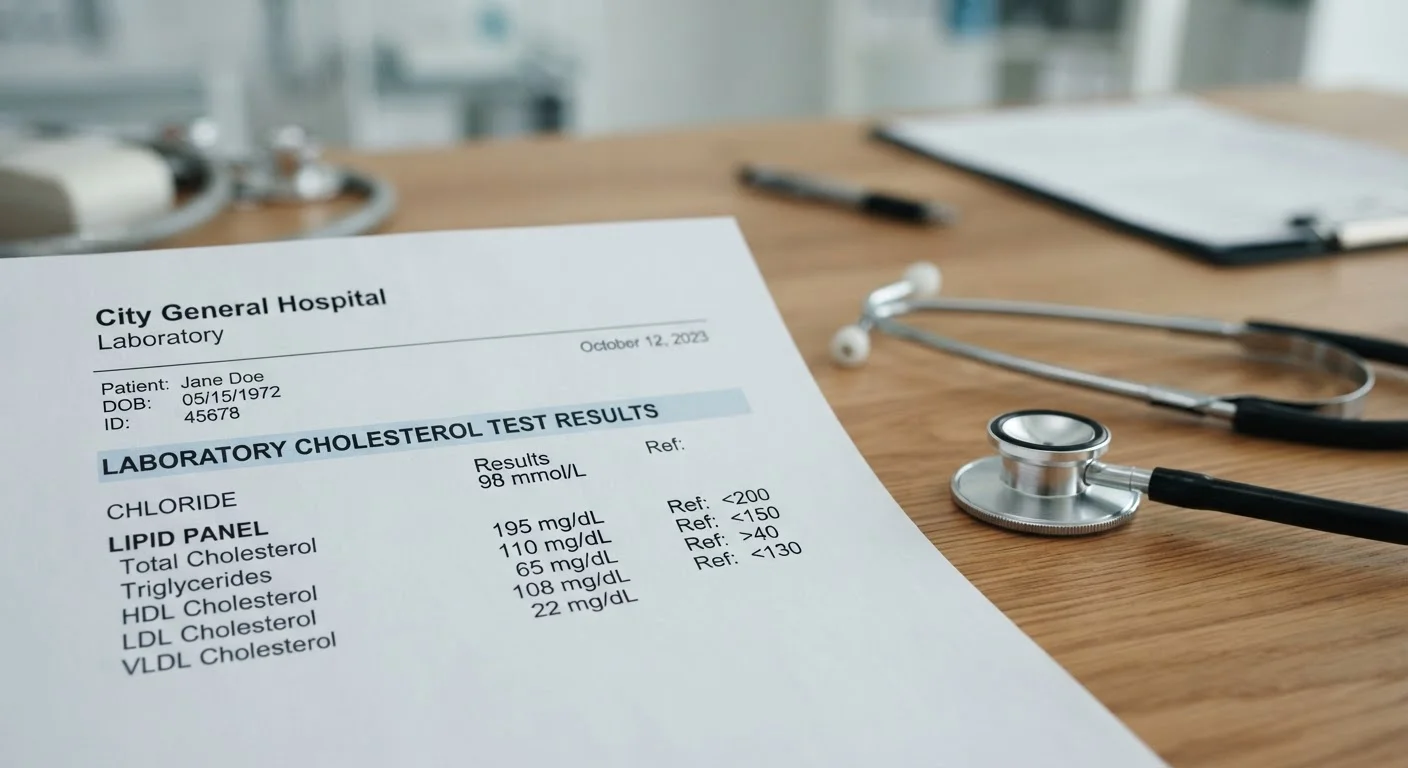
When your doctor orders a lipid panel, the lab measures four distinct values — total cholesterol, HDL, LDL, and triglycerides. Each one provides a different piece of the cardiovascular puzzle, and none should be read in isolation.
| Desirable total cholesterol | Below 200 mg/dL (American Heart Association) |
| Optimal LDL for high-risk individuals | Below 70 mg/dL (ACC/AHA Cardiovascular Risk Guidelines) |
| Protective HDL threshold (men) | 60 mg/dL or higher (American Heart Association) |
| Normal triglyceride level | Below 150 mg/dL (National Heart, Lung, and Blood Institute) |
| Recommended screening frequency (men 35+) | Every 5 years minimum (U.S. Preventive Services Task Force) |
| Fasting period before lipid panel | 9–12 hours (Standard clinical protocol) |
Total cholesterol is the starting point but is considered a rough screening number. Your doctor is more likely to focus on the individual components. For a broader view of how these values fit alongside blood pressure readings, see what your blood pressure numbers actually mean.
HDL, LDL, and Triglycerides: What Each Value Means
HDL (high-density lipoprotein) is the so-called good cholesterol because it shuttles excess cholesterol from artery walls back to the liver. Higher HDL is generally protective; men with HDL below 40 mg/dL face elevated cardiovascular risk, while 60 mg/dL or above is considered protective.
LDL (low-density lipoprotein) is the primary target of most cholesterol-lowering therapy. LDL particles can embed in artery walls and trigger plaque formation — a process called atherosclerosis. Target LDL levels are not one-size-fits-all: someone with a prior heart attack may be advised to aim below 70 mg/dL, while a lower-risk person may be fine below 100 mg/dL. Your clinician determines the right target based on your complete risk profile.
Triglycerides reflect how the body stores unused dietary energy as fat in the bloodstream. Levels above 150 mg/dL are considered borderline high; levels above 500 mg/dL carry risk of pancreatitis as well as cardiovascular harm. High triglycerides are often linked to excess refined carbohydrates, alcohol intake, physical inactivity, or certain metabolic conditions.
Lipid panel
A blood test that measures total cholesterol, HDL, LDL, and triglycerides simultaneously. It requires fasting for 9–12 hours beforehand to produce accurate results.
HDL cholesterol
High-density lipoprotein, often called 'good' cholesterol. HDL carries excess cholesterol away from arteries and back to the liver for processing, which helps protect against plaque buildup.
LDL cholesterol
Low-density lipoprotein, commonly called 'bad' cholesterol. Elevated LDL contributes to the formation of plaques inside artery walls, narrowing blood flow and raising heart attack risk.
Triglycerides
A type of fat found in the bloodstream derived from calories not immediately used for energy. High triglyceride levels are independently associated with increased cardiovascular risk.
Total cholesterol
The combined measurement of HDL, LDL, and a portion of triglycerides in your blood. Doctors use it as a broad screening number but rarely act on it in isolation.
Non-HDL cholesterol
Total cholesterol minus HDL. This figure captures all potentially harmful cholesterol-carrying particles and is considered a more comprehensive risk marker than LDL alone.
Non-HDL Cholesterol: The Number Doctors Watch Closely
Beyond LDL, clinicians increasingly focus on non-HDL cholesterol — total cholesterol minus HDL. This single figure captures LDL plus other atherogenic (plaque-forming) particles such as VLDL and IDL that a standard LDL measurement can miss, particularly in people with high triglycerides.
86 million
U.S. adults with unhealthy total cholesterol levels
According to CDC surveillance data, roughly 86 million American adults have total cholesterol above 200 mg/dL.
~50%
Men with low protective HDL levels
Approximately half of American men have HDL levels below the 40 mg/dL threshold associated with heightened cardiovascular risk, per NHANES data.
1 in 3
Adults with elevated triglycerides
National survey data indicate roughly one in three U.S. adults has borderline-high or high triglyceride levels.
A non-HDL level below 130 mg/dL is generally considered desirable for average-risk adults, though your doctor may set a different target depending on your history. If you are also reviewing other lab results, interpreting a testosterone blood test follows a similar framework of ranges and clinical context.
Numbers Alone Don't Tell the Whole Story
Doctors assess cholesterol values alongside other risk factors — age, blood pressure, smoking history, diabetes, and family history — to calculate overall cardiovascular risk. A single elevated number may not require treatment in isolation. Always discuss your full risk profile with your healthcare provider rather than interpreting any one value in isolation.
Putting Your Results in Context
Receiving your lab report is only the beginning. The next step is a structured conversation with your physician about what your specific numbers mean for your risk level. Before that appointment, it helps to prepare targeted questions.
Reading a heart health checkup: what to ask your doctor offers a ready-made checklist for that discussion. Lifestyle factors — diet quality, aerobic activity, weight, alcohol use, and smoking — influence all four lipid values and are often addressed before or alongside any medication decision.
This article is for general informational purposes only and does not constitute medical advice. Always consult a qualified healthcare professional for personal guidance about your cholesterol results, cardiovascular risk, or any treatment decisions.